
Forcep Infantile
- All products
- Surgical Instruments313 products
- Aneasthesia12 products
- Artery Forceps41 products
- Asepsis5 products
- Bone Surgery30 products
- Cotton Swab Forceps13 products
- Diagnostics6 products
- Dressing19 products
- Forceps21 products
- Measuring7 products
- Miscellaneous Products14 products
- Probes11 products
- Retractors21 products
- Scalpels18 products
- Scissors25 products
- Suture23 products
- Trocars30 products
- Dental Instruments419 products
- Applicator & Amalgame Carriers6 products
- Articulators12 products
- Bone Files3 products
- Caliper Gauges4 products
- Cotton Holder2 products
- Crown Remover2 products
- Curettes2 products
- Dissecting Kit With 13 Instruments14 products
- Espatulas3 products
- Excavators4 products
- Explorers Probes & Endodonticos Excavators15 products
- Extracting Forceps For Adults & Bone Roungers3 products
- Forcep Infantile43 products
- Fraziers4 products
- Gingival Pushers2 products
- Handles & Mouth Mirrors13 products
- Hemostats Forceps15 products
- Instruments For Carvers & Burnishers9 products
- Instruments For Endodontic39 products
- Instruments For Periodontia kitsCurettes & Sharp Punzo11 products
- Jacquette5 products
- Kit Instruments Of Model & To Wax Carvers6 products
- Matrix Retainers3 products
- Miscellaneous Products Articulos Varios7 products
- Mouth Gauges3 products
- Needle Holders8 products
- Plaster Cutting Plier1 product
- Plastic Cutting Knives5 products
- Pliers For Orthodontics & Prosthetics15 products
- Pluggers2 products
- Retractors3 products
- Root Elevators41 products
- Scissors Tigeras17 products
- Spatulas2 products
- Stainless Steel Impression Trays44 products
- Sterilizing Cases Of Stainless Steel & Accessories Of Odontologia10 products
- Syringes For Local Anesthesia9 products
- Tweezers For Sutures, Dressing & Cotton8 products
- Beauty Instruments210 products
- Acrylic Cutters7 products
- Blue Titanium Tweezer6 products
- Cuticle Nippers8 products
- Cuticle Scissors15 products
- Embroidery Scissors10 products
- Eyebrow Tweezers12 products
- Gold Titanium Tweezers8 products
- House Hold Scissors5 products
- Manicure Kits11 products
- Manicure Pushers11 products
- Matt Tweezers7 products
- Multi Titanium Tweezers8 products
- Multipurpose Scissors7 products
- Nail Cutter7 products
- Pedicure Instruments9 products
- Plastic Handle Scissors5 products
- Professional Hair Cutting Scissors16 products
- Professional Nail Cuticles Nippers8 products
- Razor5 products
- Razor Edge Dressing Scissors18 products
- Razor Edge Thinning Scissors17 products
- Standard Hair Dressing Scissors7 products
- Standard Thinning Scissors3 products
- Veterinary Instruments68 products
- Animal Care7 products
- Castration Instruments6 products
- Cattle Breeding2 products
- Cattle Marketing10 products
- Hoof & Claws8 products
- Obstetric Instruments5 products
- Restratining Instruments12 products
- Syringes, Needles & Accessories5 products
- Teat Instruments7 products
- Tooth Instruments2 products
- Trocar4 products
Showing 13–24 of 43 resultsSorted by latest
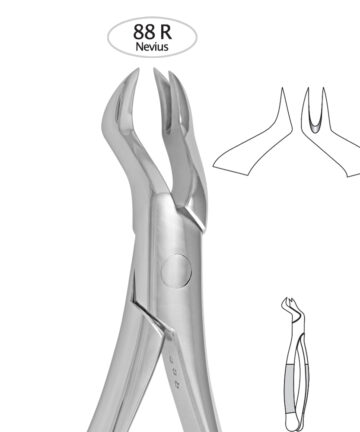
Upper Molares (Right 88 R)
SKU:
BMI-1380
Rated 0 out of 5
Upper Molars:
- Extraction Forceps
- Material: Stainless steel
- Features:
- Specifically designed for extracting upper molars; features a curved beak that conforms to the shape of the molar for effective grip and leverage.
- Ergonomic design allows for better control during extraction procedures.
- Elevators
- Material: Stainless steel
- Features:
- Used to loosen upper molars before extraction; various shapes provide access to roots and facilitate tooth removal.
- Helps minimize trauma to surrounding tissues.
- Bone Chisels and Rongeurs
- Material: Stainless steel
- Features:
- Used for removing bone around the upper molar during surgical extractions; rongeurs enable precise and controlled bone removal.
- Surgical Scissors
- Material: Stainless steel
- Features:
- Sharp blades for making incisions in soft tissue during molar extractions or surgical procedures.
- Irrigation Needles
- Material: Stainless steel or plastic
- Features:
- Long, slender tips for delivering irrigants to maintain a clean surgical field during extraction.
- Suction Tips
- Material: Plastic or stainless steel
- Features:
- Essential for clearing blood and debris during the extraction to maintain visibility and a clean field.
- X-ray Film or Sensors
- Material: Photographic film or digital sensors
- Features:
- Used to assess the position and roots of upper molars; critical for planning and executing extractions.
Specific Instrument: Right 88 R
- Right 88 R Forceps
- Material: Stainless steel
- Features:
- Specifically designed for the extraction of upper right molars.
- Features a rounded, angled beak that allows for effective engagement with the tooth and provides excellent leverage.
- Ergonomic handle design enhances clinician comfort and control during the extraction process.
Additional Notes
- Instruments are typically autoclavable for sterility and hygiene.
- Proper instrument selection and handling are crucial for the efficiency and success of upper molar extractions. Ergonomic designs help improve clinician comfort and precision during these challenging procedures.
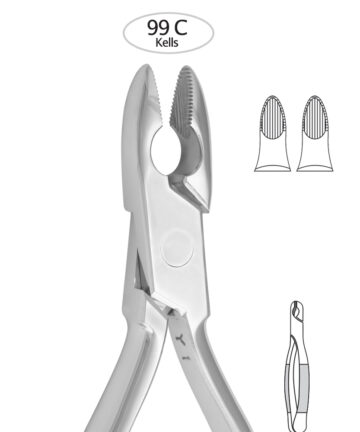
Upper Incisors, Canines, Premolars
SKU:
BMI-1381
Rated 0 out of 5
Upper Incisors, Canines, and Premolars:
- Extraction Forceps
- Material: Stainless steel
- Features:
- Designed for extracting upper incisors, canines, and premolars; features angled beaks for effective grip and leverage.
- Slim profile allows access to anterior teeth while minimizing trauma to surrounding tissues.
- Elevators
- Material: Stainless steel
- Features:
- Used to loosen teeth before extraction; various shapes provide effective access to roots and facilitate removal.
- Ergonomically designed to improve control and reduce tissue trauma.
- Endodontic Files
- Material: Stainless steel or nickel-titanium
- Features:
- Tapered and flexible for cleaning and shaping canals in incisors and premolars.
- Available in various sizes to accommodate different canal anatomies.
- Reamers
- Material: Stainless steel or nickel-titanium
- Features:
- Used to enlarge root canals; specifically designed for the anatomy of upper anterior teeth.
- Paper Points
- Material: Absorbent paper
- Features:
- Utilized for drying root canals after cleaning and irrigation; available in various sizes to fit different canal widths.
- Gutta-Percha Points
- Material: Gutta-percha (natural latex material)
- Features:
- Biocompatible material used for filling cleaned root canals; radiopaque for visibility on X-rays.
- Suction Tips
- Material: Plastic or stainless steel
- Features:
- Essential for maintaining a clear field by removing blood and debris during procedures.
- Surgical Scissors
- Material: Stainless steel
- Features:
- Sharp blades for cutting soft tissue during extraction or surgical procedures.
Specific Instrument: 99 C
- 99 C Forceps
- Material: Stainless steel
- Features:
- Specifically designed for extracting upper incisors, canines, and premolars.
- Features a tapered design for better access to the roots and an effective grip on the tooth.
- Ergonomic handle for enhanced control and comfort during extraction procedures.
Additional Notes
- Instruments are typically autoclavable for sterility and hygiene.
- Proper selection and handling of instruments are crucial for the efficiency and success of extraction and endodontic procedures, especially in the upper anterior region. Ergonomic designs help enhance clinician comfort and control during these delicate procedures.
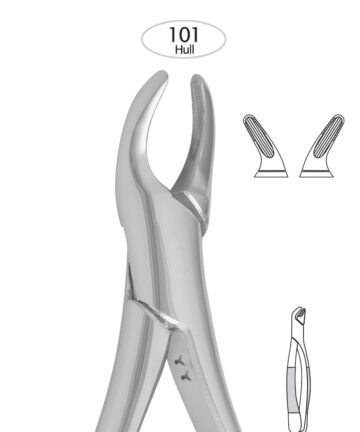
Upper Molares (Sup.10s)
SKU:
BMI-1382
Rated 0 out of 5
Upper Molars:
- Extraction Forceps
- Material: Stainless steel
- Features:
- Designed for extracting upper molars; features curved beaks that adapt to the molar’s shape for better grip and leverage.
- Ergonomic handle design for improved control and comfort during extraction.
- Elevators
- Material: Stainless steel
- Features:
- Used to loosen upper molars before extraction; various shapes provide access to roots and facilitate tooth removal.
- Helps minimize trauma to surrounding tissues.
- Bone Chisels and Rongeurs
- Material: Stainless steel
- Features:
- Used for removing bone around the molar during surgical extractions; rongeurs provide precise bone removal.
- Surgical Scissors
- Material: Stainless steel
- Features:
- Sharp blades for making incisions in soft tissue during molar extraction procedures.
- Irrigation Needles
- Material: Stainless steel or plastic
- Features:
- Long, slender tips for delivering irrigants to maintain a clean surgical field during the extraction.
- Suction Tips
- Material: Plastic or stainless steel
- Features:
- Essential for removing blood and debris during the extraction to maintain visibility and a clear field.
- X-ray Film or Sensors
- Material: Photographic film or digital sensors
- Features:
- Used to assess the position and roots of upper molars; critical for planning and executing extractions.
Specific Instrument: Sup. 10 S
- Sup. 10 S Forceps
- Material: Stainless steel
- Features:
- Specifically designed for extracting upper molars.
- Features a slim, tapered design that allows for effective access in confined spaces.
- Provides excellent grip and control during the extraction process, accommodating the complex anatomy of molars.
Additional Notes
- Instruments are typically autoclavable for sterility and hygiene.
- Ergonomic designs enhance clinician comfort and control, which is especially important when working with the challenging anatomy of upper molars. Proper instrument selection can improve the efficiency and success of the extraction procedure.
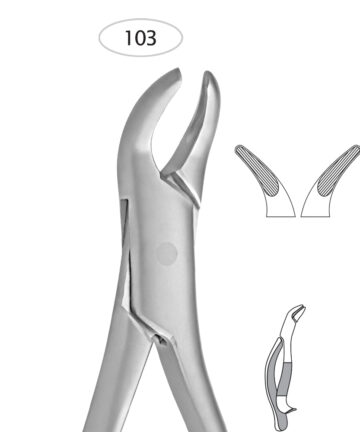
Lower Incisors, Premolars, Roots (103)
SKU:
BMI-1383
Rated 0 out of 5
Lower Incisors, Premolars, and Roots
- Extraction Forceps
- Material: Stainless steel
- Features:
- Designed for extracting lower incisors and premolars, typically featuring slim and angled beaks for optimal access and grip.
- Provides excellent leverage for effective tooth removal.
- Elevators
- Material: Stainless steel
- Features:
- Used to loosen lower incisors and premolars before extraction; various shapes allow for effective access to roots.
- Ergonomically designed to reduce trauma to surrounding tissues.
- Endodontic Files
- Material: Stainless steel or nickel-titanium
- Features:
- Tapered and flexible for cleaning and shaping narrow canals of lower incisors and premolars.
- Available in multiple sizes to suit different canal anatomies.
- Reamers
- Material: Stainless steel or nickel-titanium
- Features:
- Used to enlarge root canals during endodontic procedures, specifically designed for the unique anatomy of lower anterior teeth.
- Paper Points
- Material: Absorbent paper
- Features:
- Utilized for drying root canals after cleaning and irrigation; available in various sizes to match different canal widths.
- Gutta-Percha Points
- Material: Gutta-percha (natural latex material)
- Features:
- Biocompatible material used for filling cleaned root canals; radiopaque for visibility on X-rays.
- Suction Tips
- Material: Plastic or stainless steel
- Features:
- Essential for maintaining a clear surgical field by removing blood and debris during procedures.
- Surgical Scissors
- Material: Stainless steel
- Features:
- Sharp blades for making incisions in soft tissue during extraction or surgical procedures.
- Matrix Bands
- Material: Thin stainless steel or plastic
- Features:
- Used to create temporary walls during restorative procedures, ensuring proper tooth contour.
Additional Notes
- Instruments are typically autoclavable to ensure sterility and hygiene.
- Proper selection and handling of instruments are crucial for the efficiency and success of extraction and endodontic procedures, especially in the lower anterior region. Ergonomic designs are important for enhancing clinician comfort and control during these delicate procedures.
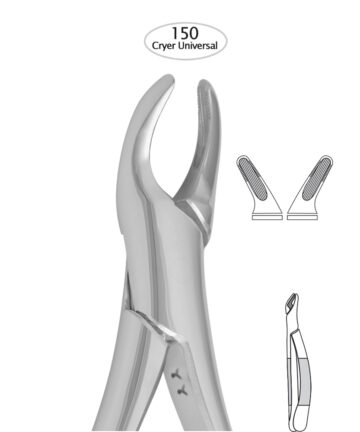
Upper Incisors, Premolars, Roots
SKU:
BMI-1384
Rated 0 out of 5
Upper Incisors, Premolars, and Roots:
- Extraction Forceps
- Material: Stainless steel
- Features:
- Designed for extracting upper incisors and premolars; typically features angled beaks for effective grip and leverage.
- Slim profile for access in the anterior region.
- Elevators
- Material: Stainless steel
- Features:
- Used to loosen upper incisors and premolars before extraction; various shapes for effective access to roots.
- Provides leverage to minimize trauma to surrounding tissues.
- Endodontic Files
- Material: Stainless steel or nickel-titanium
- Features:
- Tapered and flexible for cleaning and shaping root canals of upper incisors and premolars.
- Available in various sizes to accommodate different canal anatomies.
- Reamers
- Material: Stainless steel or nickel-titanium
- Features:
- Used to enlarge root canals during endodontic procedures; designed specifically for the anatomy of upper anterior teeth.
- Paper Points
- Material: Absorbent paper
- Features:
- Utilized for drying root canals after cleaning; available in various sizes for different canal widths.
- Gutta-Percha Points
- Material: Gutta-percha (natural latex material)
- Features:
- Biocompatible filling material used for sealing root canals; radiopaque for visibility on X-rays.
- Suction Tips
- Material: Plastic or stainless steel
- Features:
- Essential for maintaining a clear field by removing blood and debris during procedures.
- Surgical Scissors
- Material: Stainless steel
- Features:
- Sharp blades for cutting soft tissue during extraction or surgical procedures.
- Matrix Bands
- Material: Thin stainless steel or plastic
- Features:
- Flexible bands used to create a temporary wall during restorative procedures, ensuring proper contour and shape.
Additional Notes
- Instruments are typically autoclavable for hygiene and sterility.
- Proper instrument selection and handling are crucial for the efficiency and success of extraction and endodontic procedures, particularly in the upper anterior region. Ergonomic designs enhance clinician comfort and control during these delicate procedures.
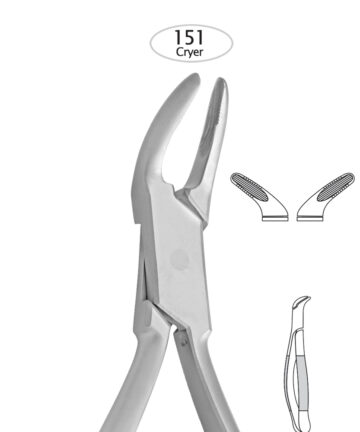
Lower Incisors, Premolars, Roots
SKU:
BMI-1385
Rated 0 out of 5
Lower Incisors, Premolars, and Roots:
- Extraction Forceps
- Material: Stainless steel
- Features:
- Designed for extracting lower incisors and premolars; features angled beaks for better grip and leverage.
- Slim profile for access in tight spaces.
- Elevators
- Material: Stainless steel
- Features:
- Used to loosen incisors and premolars before extraction; various shapes to effectively access and lift the teeth.
- Provides necessary leverage to minimize trauma.
- Endodontic Files
- Material: Stainless steel or nickel-titanium
- Features:
- Tapered and flexible for cleaning and shaping narrow canals of lower incisors and premolars.
- Available in various sizes to accommodate different canal anatomies.
- Reamers
- Material: Stainless steel or nickel-titanium
- Features:
- Used to enlarge root canals during endodontic procedures; designed for the specific anatomy of lower anterior teeth.
- Paper Points
- Material: Absorbent paper
- Features:
- Utilized for drying root canals after irrigation; available in multiple sizes to fit different canal widths.
- Gutta-Percha Points
- Material: Gutta-percha (natural latex material)
- Features:
- Biocompatible filling material for root canals; radiopaque for visibility on X-rays.
- Suction Tips
- Material: Plastic or stainless steel
- Features:
- Essential for clearing blood and debris during procedures, maintaining a clean surgical field.
- Surgical Scissors
- Material: Stainless steel
- Features:
- Sharp blades for making incisions in soft tissue during extraction or surgical procedures.
- Matrix Bands
- Material: Thin stainless steel or plastic
- Features:
- Used for creating a temporary wall during restorative procedures, ensuring proper tooth contour.
Additional Notes
- Instruments are typically autoclavable to ensure sterility and hygiene.
- Proper selection and use of instruments are crucial for the efficiency and success of extraction and endodontic procedures, especially in the confined space of the lower anterior region. Ergonomic designs help enhance clinician comfort and control during these delicate procedures.
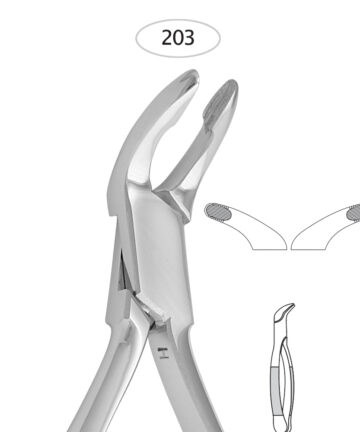
Lower Incisors, Roots (203)
SKU:
BMI-1386
Rated 0 out of 5
Lower Incisors and Roots:
- Extraction Forceps
- Material: Stainless steel
- Features: Designed for extracting lower incisors; typically features a slim, angled design for optimal access and grip.
- Elevators
- Material: Stainless steel
- Features: Used to loosen lower incisors and their roots before extraction; various shapes for accessing the delicate anatomy of the lower anterior teeth.
- Endodontic Files
- Material: Stainless steel or nickel-titanium
- Features: Tapered and flexible for cleaning and shaping the narrow canals of lower incisors.
- Reamers
- Material: Stainless steel or nickel-titanium
- Features: Used to enlarge root canals; designed for the unique anatomy of lower incisors.
- Paper Points
- Material: Absorbent paper
- Features: Used for drying root canals after cleaning; available in various sizes to fit different canal widths.
- Gutta-Percha Points
- Material: Gutta-percha (natural latex material)
- Features: Biocompatible material used for filling cleaned canals; radiopaque for visibility on X-rays.
- Suction Tips
- Material: Plastic or stainless steel
- Features: Essential for maintaining a clear field by removing blood and debris during procedures.
Specific Instrument: 203
- 203 Forceps
- Material: Stainless steel
- Features:
- Specifically designed for the extraction of lower incisors.
- Features a slim, curved design that allows for effective gripping of the tooth while minimizing trauma to surrounding tissues.
- Ergonomically designed for better control and comfort during use.
Additional Notes
- Instruments are typically autoclavable for sterility.
- Proper instrument selection and handling are crucial for the efficiency and success of extraction procedures, particularly in the delicate area of the lower incisors and their roots. Ergonomic designs enhance clinician comfort and precision during treatment.
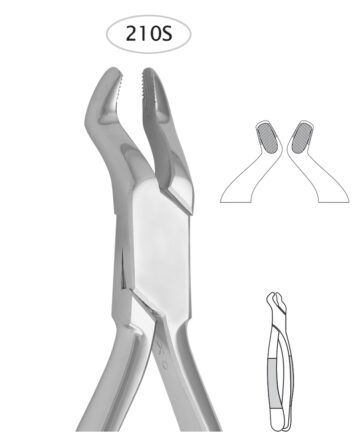
Upper Third Molars (210 S)
SKU:
BMI-1387
Rated 0 out of 5
Upper Third Molars:
- Extraction Forceps
- Material: Stainless steel
- Features: Designed for extracting upper third molars; typically features angled beaks that conform to the molar's shape for better grip and leverage.
- Elevators
- Material: Stainless steel
- Features: Used to loosen upper third molars prior to extraction; various shapes designed to access roots effectively and provide necessary leverage.
- Bone Chisels and Rongeurs
- Material: Stainless steel
- Features: Used for removing bone around the upper third molar during surgical extractions; rongeurs allow for precise and controlled bone removal.
- Surgical Scissors
- Material: Stainless steel
- Features: Sharp blades for making incisions in soft tissue during extraction procedures.
- Irrigation Needles
- Material: Stainless steel or plastic
- Features: Long, slender tips for delivering irrigants to maintain a clear surgical field during the extraction.
- Suction Tips
- Material: Plastic or stainless steel
- Features: Essential for clearing blood and debris during the procedure, ensuring visibility and cleanliness.
- X-ray Film or Sensors
- Material: Photographic film or digital sensors
- Features: Used for assessing the position and roots of upper third molars; vital for planning and executing extractions.
Specific Instrument: 210 S
- 210 S Forceps
- Material: Stainless steel
- Features:
- Specifically designed for the extraction of upper third molars.
- Features a more tapered design compared to other forceps, allowing for better access in tight spaces.
- Provides effective grip and control, particularly useful for molars with complex root structures.
Additional Notes
- Instruments are generally autoclavable to ensure sterility and hygiene.
- Ergonomic designs enhance clinician comfort and control, which is especially important for the challenging anatomy of upper third molars. Proper instrument selection and handling can significantly improve the efficiency and success of the extraction procedure.
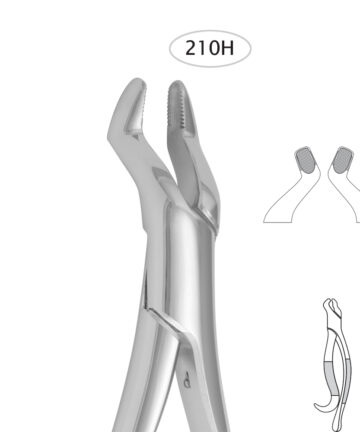
Upper Third Molars (210 H)
SKU:
BMI-1388
Rated 0 out of 5
Upper Third Molars:
- Extraction Forceps
- Material: Stainless steel
- Features: Designed specifically for extracting upper third molars; features angled beaks that adapt to the shape of the molar for effective gripping and leverage.
- Elevators
- Material: Stainless steel
- Features: Used to loosen upper third molars before extraction; various designs to provide access to the roots and enhance leverage.
- Bone Chisels and Rongeurs
- Material: Stainless steel
- Features: Used for removing bone around the upper third molar during surgical extractions; rongeurs assist in precise bone removal.
- Surgical Scissors
- Material: Stainless steel
- Features: Sharp blades for cutting soft tissue during the extraction process.
- Irrigation Needles
- Material: Stainless steel or plastic
- Features: Long, slender tips for delivering irrigants to keep the surgical area clear and maintain cleanliness during the procedure.
- Suction Tips
- Material: Plastic or stainless steel
- Features: Essential for removing blood and debris during the extraction to maintain visibility and a clean field.
- X-ray Film or Sensors
- Material: Photographic film or digital sensors
- Features: Used to assess the position and roots of upper third molars; critical for planning and performing extractions.
Specific Instrument: 210 H
- 210 H Forceps
- Material: Stainless steel
- Features:
- Specifically designed for the extraction of upper third molars.
- Features a robust design with angled beaks to effectively grasp the molar, accommodating its anatomical structure.
- Provides excellent leverage and control during the extraction process.
Additional Notes
- Instruments are generally autoclavable for sterility and hygiene.
- Ergonomic designs enhance clinician comfort and control, especially important when working with the complexities associated with upper third molars. Proper instrument selection can improve the efficiency and success of the extraction procedure.
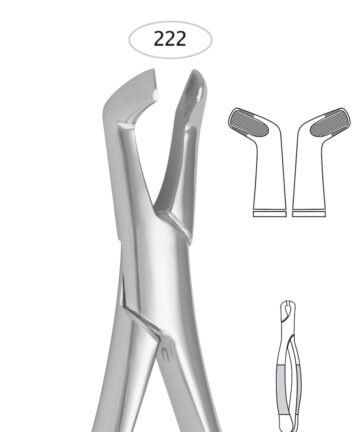
Lower Third Molars
Rated 0 out of 5
Lower Third Molars:
- Extraction Forceps
- Material: Stainless steel
- Features: Designed specifically for extracting lower third molars; features angled beaks for effective gripping and leverage.
- Elevators
- Material: Stainless steel
- Features: Used to loosen lower third molars before extraction; various shapes to access the roots effectively, especially in tight spaces.
- Bone Chisels and Rongeurs
- Material: Stainless steel
- Features: Used for removing bone around the third molar during surgical extractions; rongeurs allow for precise and controlled bone removal.
- Surgical Scissors
- Material: Stainless steel
- Features: Sharp blades for making incisions in soft tissue during surgical extractions.
- Irrigation Needles
- Material: Stainless steel or plastic
- Features: Long, slender tips for delivering irrigants to maintain a clean field during the extraction procedure.
- Suction Tips
- Material: Plastic or stainless steel
- Features: Essential for removing blood and debris during the extraction process to keep the surgical area clear.
- X-ray Film or Sensors
- Material: Photographic film or digital sensors
- Features: Used to assess the position and roots of lower third molars; critical for planning and executing extractions.
Additional Notes
- Instruments are typically autoclavable to ensure sterility and hygiene.
- Ergonomic designs enhance clinician comfort and control, which is especially important when dealing with the complex anatomy of lower third molars. Proper selection and use of instruments can significantly improve the efficiency and success of extraction procedures.
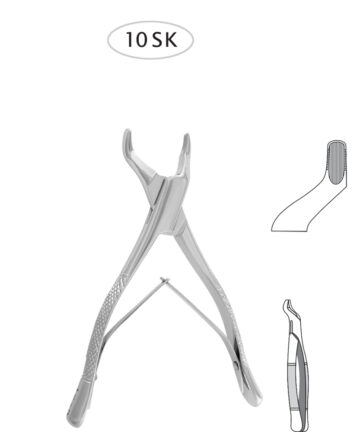
Upper Molares (Sup.10SK)
SKU:
BMI-1389
Rated 0 out of 5
Upper Molars:
- Extraction Forceps
- Material: Stainless steel
- Features: Designed for extracting upper molars; features curved beaks that conform to the molar’s shape for better grip and leverage.
- Elevators
- Material: Stainless steel
- Features: Used to loosen upper molars before extraction; various designs to access roots effectively and provide leverage.
- Bone Chisels and Rongeurs
- Material: Stainless steel
- Features: Used for removing bone around the molar during surgical extractions; rongeurs help with precise bone removal.
- Surgical Scissors
- Material: Stainless steel
- Features: Sharp blades for making incisions in soft tissue during molar extractions.
- Irrigation Needles
- Material: Stainless steel or plastic
- Features: Long, slender tips for delivering irrigants to maintain a clear field during procedures.
- Suction Tips
- Material: Plastic or stainless steel
- Features: Essential for removing blood and debris during the extraction process.
- X-ray Film or Sensors
- Material: Photographic film or digital sensors
- Features: Used to assess the position and roots of upper molars; crucial for planning and executing extractions.
Specific Instrument: Sup. 10 SK
- Sup. 10 SK Forceps
- Material: Stainless steel
- Features:
- Specifically designed for extracting upper molars.
- Features wide, rounded beaks that provide a secure grip on the molar.
- Ergonomic design for better leverage and control during extraction procedures.
Additional Notes
- Instruments are typically autoclavable for hygiene and sterility.
- Ergonomic designs enhance clinician comfort and control, which is especially important when working with the challenging anatomy of upper molars. Proper instrument use can improve extraction efficiency and patient outcomes.
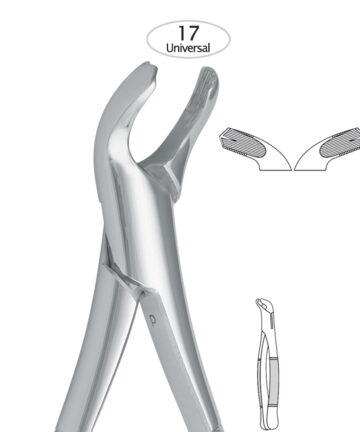
Lower Molares
SKU:
BMI-1390
Rated 0 out of 5
Lower Molars:
- Extraction Forceps
- Material: Stainless steel
- Features: Designed specifically for extracting lower molars; features angled beaks for effective gripping and leverage.
- Elevators
- Material: Stainless steel
- Features: Used to loosen lower molars before extraction; various shapes for accessing roots effectively, particularly in tight spaces.
- Bone Chisels and Rongeurs
- Material: Stainless steel
- Features: Used for removing bone around the molar during surgical extractions; rongeurs allow for precise bone removal.
- Surgical Scissors
- Material: Stainless steel
- Features: Sharp blades for cutting soft tissue during surgical extractions of lower molars.
- Irrigation Needles
- Material: Stainless steel or plastic
- Features: Long, slender tips for flushing debris from the extraction site and maintaining a clean field during surgery.
- Suction Tips
- Material: Plastic or stainless steel
- Features: Essential for removing blood and debris during the extraction procedure to keep the area clear.
- X-ray Film or Sensors
- Material: Photographic film or digital sensors
- Features: Used for assessing the position and roots of lower molars; crucial for planning and executing extractions.
Additional Notes
- Instruments are generally autoclavable for sterility and hygiene.
- Ergonomic designs are important for clinician comfort and precision during procedures, especially given the complexities associated with lower molar extractions. Proper instrument selection can significantly enhance the effectiveness and efficiency of the extraction process.
Get updates on surgical instruments, new designs & wholesale deals.
About Us
Bio Medical Instruments, established in 1960, is a leading manufacturer and exporter of surgical and dental instruments based in Sialkot, Pakistan. Backed by decades of experience and skilled craftsmanship, we produce high-quality reusable and single-use instruments for healthcare professionals worldwide. Our commitment to quality, innovation, and customer satisfaction has earned us a strong reputation in international markets. We also provide reliable OEM and ODM manufacturing solutions to global medical companies.
Get In Touch
- Unit #1 – Production & Export: Pacca Garha Islam Nagar Road, Sialkot 51310, Pakistan
- Unit #2 – Forging Manufacturing: Roras Road, Dubala Tiba Bugwal Awan, Sialkot 51310, Pakistan
- Phone Number: 052 4262124
- Phone Number: +92 300 6175930
- Email: info@biomedinst.com
- Website: biomedinst.com
© 2026 Copyright Bio Medical Instruments. All Rights Reserved.
Designed & Developed by WEBRISE STUDIO